
Every advertising platform has a golden window. Google Ads in 2003, when clicks cost pennies. Facebook in 2012, before every brand piled in. The advertisers who moved during those windows bought attention at prices that look absurd in hindsight — and built moats their competitors never closed. Right now, that window is open again: ChatGPT Ads. Here's what they are, why the economics are so lopsided in early advertisers' favor, and how to decide — this quarter, not next year — whether your business should be in.
What Are ChatGPT Ads?
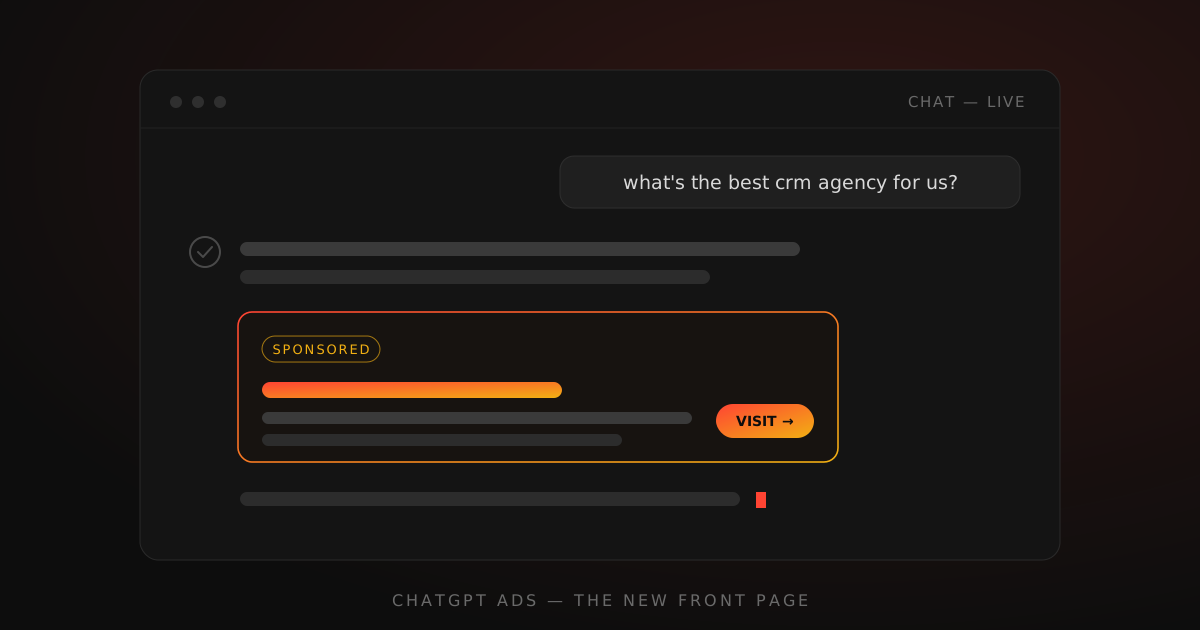
ChatGPT Ads are paid placements inside ChatGPT's answers. When a user asks something with commercial intent — "what's the best CRM for a 20-person sales team?", "who should build my company's website?" — a clearly labeled sponsored recommendation can appear alongside the assistant's organic answer. One question, one short list, and your business on it.
That placement is fundamentally different from a search ad. On Google, you're one of four ads above ten blue links, fighting for a fraction of a second of attention. In a conversation, the user asked a question and is reading the answer. There is no page two.
Why Are ChatGPT Ads So Underpriced Right Now?
Three forces, all temporary:
- The auction is young. Ad prices are set by competition, and most advertisers haven't shown up yet. The same dynamic made early Google and early Facebook famously cheap — and it corrected within a couple of years, both times.
- The intent is unusually rich. A keyword search gives an advertiser two or three words of context. A conversational query gives a paragraph: company size, industry, budget hints, the actual problem. Better context means better-matched ads, which means the clicks you pay for are more qualified.
- Usage is compounding. Hundreds of millions of people now ask an AI assistant the questions they used to type into Google — including the "who should I hire?" questions that drive services businesses. Ad inventory grows with usage; competition lags it.
Underpriced never means free, and it never means forever. It means the ratio of attention-to-cost is temporarily distorted in the buyer's favor. That's the whole pitch.
Want this running on your campaigns? Talk to a Google Partner agency →
What Do ChatGPT Ads Cost?
Pricing is auction-based and still settling — which is the point. With thin competition, effective costs per qualified visitor generally land well below what the equivalent high-intent search terms cost on Google, where twenty years of competition have priced most categories to the bone. Practically: a test budget of a few thousand dollars a month is enough to generate real signal in most categories. We recommend treating the first 60–90 days as a measured experiment, not a set-and-forget channel.
Who Should Run ChatGPT Ads (And Who Shouldn't)?
Strong fit:
- Services and software businesses whose buyers ask "who's the best…" or "what should I use for…" — agencies, SaaS, professional services, B2B of nearly every kind.
- Considered purchases where a recommendation carries weight — the exact queries where users trust the assistant's answer most.
- Brands already investing in AEO — ads and organic AI visibility reinforce each other.
Weak fit (for now):
- Pure impulse products with no research step — the conversational surface rarely enters the journey.
- Businesses with no conversion tracking. Conversational journeys are less linear than search; if you can't attribute, you can't optimize, and you'll conclude it "doesn't work" when your measurement is what doesn't work.
How Do ChatGPT Ads Compare to Google Ads?
- Intent: Google captures declared keyword intent; ChatGPT captures conversational intent with far more context per query.
- Competition: Google's auctions are mature and expensive; ChatGPT's are early and thin.
- Format: Google rewards tight keyword-to-ad matching; ChatGPT rewards being a credible recommendation — closer to earning a referral than winning a keyword.
- Verdict: not either/or. Google remains the biggest pool of commercial demand. The winning 2026 portfolio runs Google for proven capture, ChatGPT for underpriced reach, and retargeting across both — which is exactly how we structure client accounts.
How to Launch Your First ChatGPT Ads Campaign
- Start from questions, not keywords. List the 10–20 questions your best customers would ask an assistant in the week before they found you. That's your targeting brief.
- Build recommendation-grade creative. Your ad is competing with an AI's organic answer, so it needs to read like a credible recommendation: who you're for, proof (partnerships, results, reviews), and one clear next step.
- Instrument everything before spending. UTM-tagged landing pages, GA4 events, and CRM attribution so every lead carries its source. (This plumbing is half the battle — and half of what we do.)
- Land them on a page that finishes the conversation. A visitor arriving from an AI recommendation has high trust and specific context. Generic homepages waste that; a focused landing page with proof and a booking CTA converts it.
- Review weekly, resize monthly. Young auctions move. The advertisers winning right now treat it like a trading position, not a billboard.
The Uncomfortable Math of Waiting
Skeptics said the same thing about Google Ads in 2003 and Facebook Ads in 2012: unproven, weird format, wait for the data. The data arrived — as case studies published by the early movers, at auction prices that no longer existed. If your buyers are already asking ChatGPT who to hire (they are — ask it your own category question right now and see what comes back), then the question isn't whether this channel matters. It's whether you'd rather learn it while it's cheap or after your competitor does.
Frequently Asked Questions
What are ChatGPT Ads?
Paid, labeled placements inside ChatGPT's answers, shown when a user's question signals commercial intent — like asking for the best product, service, or provider in a category.
How much do ChatGPT Ads cost?
Auction-based and still settling. With few advertisers competing, effective costs per qualified visitor typically run well below equivalent Google search terms. A few thousand dollars a month is a meaningful test.
Are ChatGPT Ads worth it in 2026?
If your buyers ask AI assistants for recommendations — services, software, considered purchases — yes, with proper tracking. The channel's economics favor early movers; its measurement punishes sloppy setups.
Do ChatGPT Ads replace Google Ads?
No. Run them as a portfolio: Google for proven demand capture, ChatGPT for underpriced early reach, retargeting to close the loop across both.
How do I get started?
Define your buyers' questions, set up attribution that survives a conversational journey, build recommendation-style creative, and test with a weekly review cadence — or have an agency that already runs the channel do it for you.
Want In While the Window's Open?
We run ChatGPT Ads alongside Google and social campaigns for our clients — as a Google Partner agency with the CRM and attribution plumbing to prove what every dollar did. We'll tell you honestly if your category isn't ready for the channel yet; if it is, we'll have you live in weeks.
See our ChatGPT advertising service or book a free strategy call — we'll map your buyers' questions and show you exactly what a test would look like.